
Choosing Assisted Living for a Parent | Family Checklist
Quick answer: Start with your parent’s wishes and daily needs. Then compare communities in person, ask what services and fees are included, review staffing and communication, and check licensing and inspection information. The best choice is the one that fits the individual, not simply the most attractive brochure.
Elder Placement Agency Quick Take
Choosing assisted living is a series of smaller decisions. Involve your parent as much as possible, write down their priorities, tour with the same questions at each community, and request a clear explanation of costs and services before deciding.
When a parent needs more support, the questions can arrive all at once. You may be balancing safety, independence, family schedules, budget, and a desire to honor the life your parent already enjoys. You do not need to solve every question in a single conversation.

Illustration: A tour is a chance to ask how a community supports the routines and preferences that matter to your family.
Start With Your Parent’s Priorities
Ask your parent what a comfortable day looks like and what they would like to keep doing. Listen for concerns about privacy, pets, meals, visitors, faith, language, hobbies, and location. Some people want more social opportunities; others value quiet time and familiar routines.
Which daily activities are becoming difficult, and what help feels welcome?
What routines, relationships, and choices matter most?
How close should the community be to family and familiar places?
What questions would your parent like answered on a visit?
If the conversation is difficult, begin with what has changed rather than presenting a decision as already made. Our guide to talking with a parent about assisted living offers a starting point.
Compare the Types of Support
Assisted living is one option among several. Services and admission criteria vary, so ask each provider what it can actually offer. A clinician can help your family understand individual health and care needs.
Remaining at home with support
Some people prefer to stay at home and arrange help with meals, transportation, household tasks, or personal care. Consider who will provide support, the home environment, availability, and the combined cost.
Independent living
Independent living may appeal to someone who wants fewer household responsibilities and opportunities to connect. Ask which services are included and how additional help can be arranged if needs change.
Assisted living
Assisted living communities may offer housing, meals, activities, and help with everyday tasks. Ask specifically about the support your parent needs, how it is assessed, and whether there is an additional charge.
Memory care and skilled nursing
Memory care may offer specialized routines and support for people living with dementia. Skilled nursing provides a different level of nursing care. Ask a qualified clinician and each provider which services are appropriate for the individual’s circumstances.
The National Institute on Aging’s overview explains different residential care settings. For local guidance, see our Florida assisted living placement page.
A Family Checklist for Touring Assisted Living
Bring the same list to each visit and write down the answers. If possible, include your parent and allow time to observe the community beyond the formal presentation.
Daily life and personal choice
What does a typical day look like, and can residents choose their routines?
Can we see the activities calendar, dining options, and outdoor areas?
How are dietary, cultural, language, and spiritual preferences supported?
What are the visiting arrangements, and may residents personalize their rooms?
Care, staffing, and communication
How are needs assessed and how often is the service plan reviewed?
What help is available during evenings, nights, and weekends?
How are families contacted when a resident’s needs change?
Who handles concerns, and how can residents or families raise them?
What happens if the support your parent needs increases?
Costs and practical details
What does the base monthly fee include for this person’s current needs?
Which services, supplies, transportation, or activities cost extra?
Are there move-in fees, deposits, or future rate changes to understand?
Can the community provide its current pricing and terms in writing?
Is there availability or a waiting list, and what are the next steps?
The National Institute on Aging’s selection guide also recommends asking about services, costs, and individual preferences.
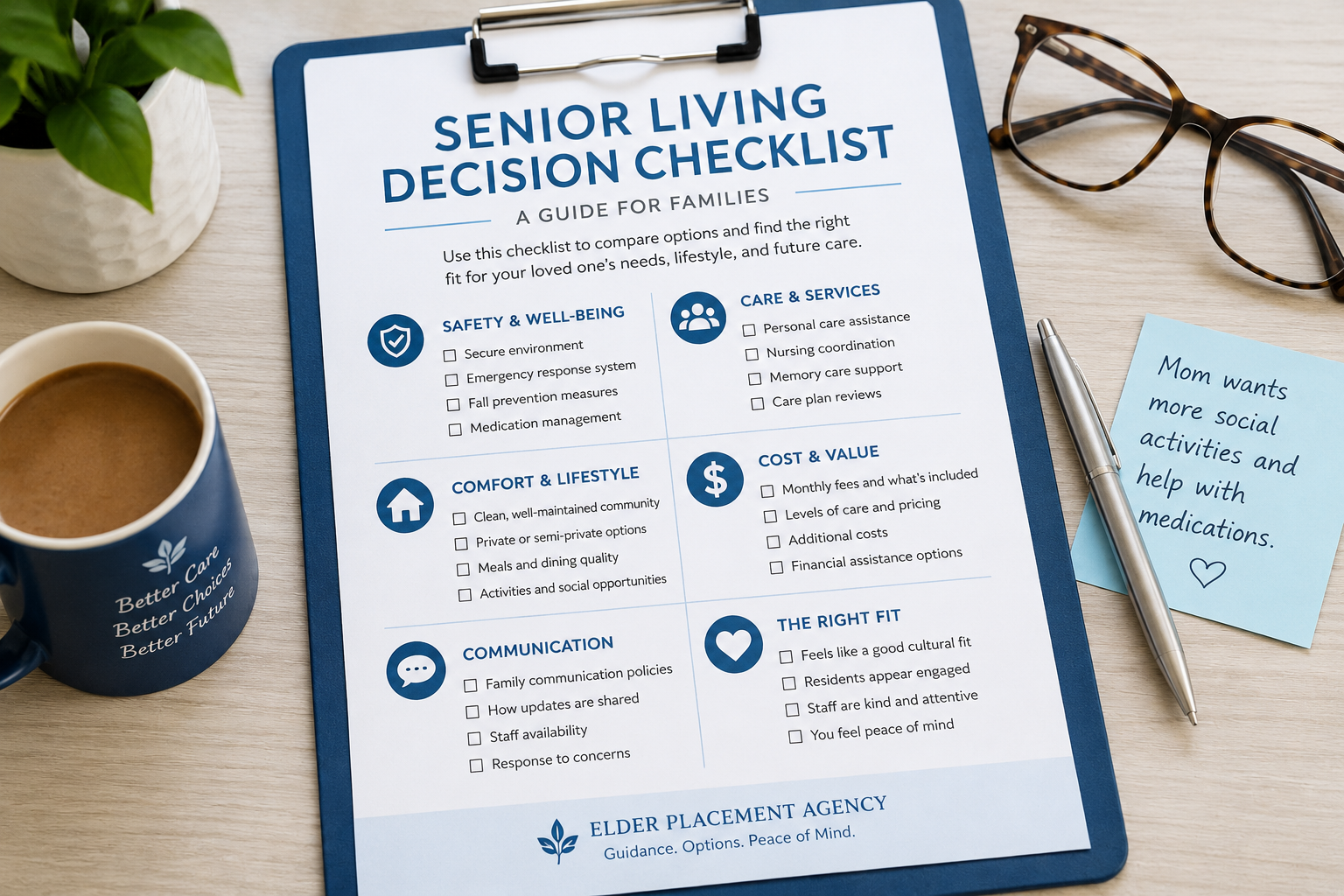
Illustration: A written checklist helps families compare answers after visiting more than one setting.
Look Beyond the Brochure
Notice whether staff speak respectfully with residents and whether the surroundings feel comfortable to your parent. Ask to see the areas residents use every day. A beautiful entrance alone does not tell you how help is provided at night or how concerns are handled.
A for-profit community is not automatically a poor choice, and nonprofit status alone does not establish a good fit. Compare the actual services, staff communication, costs, and resident experience in each place.
Check Florida Licensing and Inspection Information
Florida’s Agency for Health Care Administration provides inspection information for assisted living facilities. Review available information alongside your visit and other sources, and ask the community about any questions the records raise. The agency notes that inspection findings should be interpreted carefully.
Make a Decision That Fits the Person
After each tour, ask your parent what felt comfortable and what did not. Compare the answers, the written costs, the support offered, and the practical location. If something is unclear, ask again before deciding. A second visit or a conversation with staff may help you clarify an unanswered question.
Frequently Asked Questions
How do I know whether assisted living is right for my parent?
Begin with your parent’s wishes and the help they need day to day. Compare support at home and residential options, and involve a qualified clinician when health needs are part of the decision. No single setting fits every person.
What should we ask on an assisted living tour?
Ask about daily routines, staffing, care assessments, communication, costs, and what happens if needs change. Take notes and use the same questions at each community.
What does the monthly cost include?
It varies by community and the services a resident needs. Request a written breakdown of the base rate, additional services, deposits, and conditions under which charges may change.
Can my parent keep their own doctor?
Ask the community and the doctor directly. Transportation, appointment arrangements, insurance networks, and a particular provider’s practices can affect the answer.
What happens if my parent’s care needs change?
Ask how the community reassesses needs, what additional support it can provide, how charges may change, and when a different setting might be needed. Obtain the answer for the specific community.
How is memory care different from assisted living?
Memory care may provide specialized support and routines for people living with dementia. Programs differ, so ask about staff training, activities, supervision, and the services available for your parent’s needs.
Should my parent come on the tour?
When possible and comfortable, include your parent so they can see the setting and share their preferences. A shorter visit or a later visit to a favorite option may be easier for some families.
How can I check a Florida assisted living community?
Review available state licensing and inspection information, visit, ask questions, and consider more than one source. Discuss any concerns directly with the community.
A Supportive Next Step
You do not need to have every answer before beginning. Elder Placement Agency can help you talk through questions about senior living options in Central Florida. Contact Elder Placement Agency or call (407) 544-4704 when you are ready.
For general education only; consult qualified professionals about individual medical, legal, and financial decisions. Elder Placement Agency is a referral and advisory service, not a licensed healthcare provider. The agency may receive referral fees from senior living communities.
Our websites: Elder Placement Agency | Certainly Sold | FL Homes Magazine | Smart-N-Loans
Related Guides and Next Steps
About Elder Placement Agency. Elder Placement Agency is a free senior living placement and advisory service run by Ray and Kelly Nadeau in Lake Mary, Florida, helping families across Seminole, Orange and Volusia counties find the right fit for a loved one. Have a question about your parent's next step? Call (407) 544-4704 or request a free consultation.
Last updated: October 2026. This article is general information for families, not medical, legal, or financial advice. Always confirm care needs with your loved one's physician and verify any facility's license and inspection history.
Elder Placement Agency is a referral and advisory service — not a licensed healthcare provider, attorney, or financial advisor. Our guidance is free to families; we receive referral fees from senior living communities. Equal Housing Opportunity.
