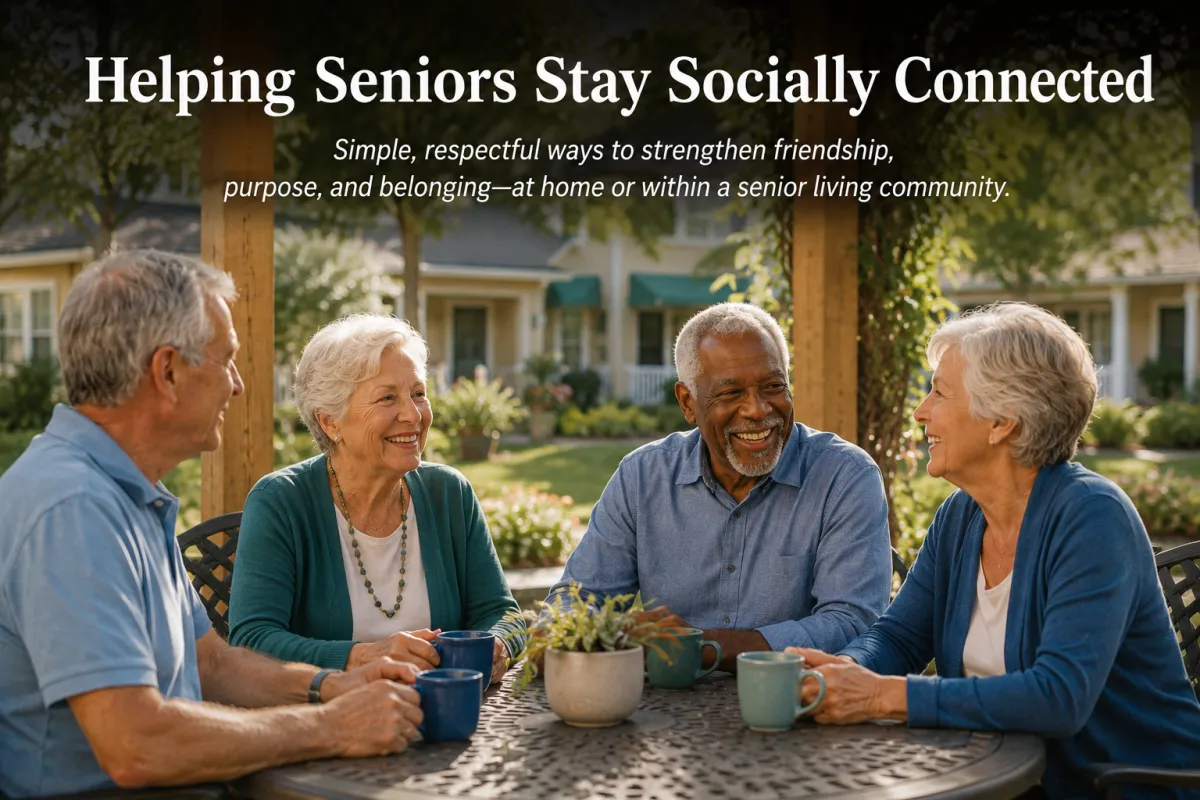
Helping Seniors Stay Socially Connected in Florida
Helping seniors stay socially connected is not about keeping every hour busy. It is about protecting the relationships, routines, interests, and sense of purpose that make everyday life feel meaningful.
A person may spend time around others and still feel lonely. Another may have a smaller social circle yet feel deeply supported. That distinction matters. Social isolation describes limited contact or support, while loneliness is the personal feeling of disconnection.
Quick Take
Consistency often matters more than intensity. A dependable weekly call, shared lunch, walking group, or familiar class may create more connection than an occasional large event.
Why Meaningful Connection Matters
Meaningful relationships can provide reassurance, encouragement, practical support, and a stronger sense of belonging. The Centers for Disease Control and Prevention recognizes loneliness and social isolation as important public-health concerns.
Social patterns may change after retirement, the loss of a spouse, reduced mobility, a move, or a change in health. These transitions do not automatically mean that an older adult is lonely, but they can reduce the easy, everyday contact that once happened naturally.
Changes worth noticing
Withdrawing from activities that were previously enjoyable
Going several days without a meaningful conversation
Expressing that they feel forgotten, burdensome, or disconnected
Declining every invitation without explaining what feels uncomfortable
Showing persistent changes in mood, motivation, sleep, or self-care
These signs deserve curiosity rather than judgment. A gentle question such as, “What have you been missing lately?” may reveal more than insisting that someone attend an activity.
Two-Minute Connection Check
Give one point for each statement that is usually true:
They speak with someone they trust most days.
They have at least one activity or visit to anticipate.
They can reach family or friends without major difficulty.
They feel included in decisions affecting their routine.
They have a role that helps them feel useful or appreciated.
See what the score may suggest
4–5 points: A healthy foundation may already be in place. Focus on keeping familiar connections dependable.
2–3 points: One or two practical changes may help, such as transportation, a regular call, or a personally relevant activity.
0–1 point: Begin with one comfortable form of contact and consider discussing persistent withdrawal with an appropriate healthcare professional.
Persistent sadness, sudden confusion, significant behavioral changes, or statements about self-harm require prompt professional attention. This article provides general educational information and is not medical advice.
Everyday Ways to Build Connection
The most successful approach is personal. Start with the people, places, and interests that have already mattered to your loved one. Connection is easier to sustain when it feels familiar, voluntary, and respectful.
Start with one inviting group activity
Walking groups, gardening, music, cards, art workshops, book discussions, exercise classes, faith gatherings, and community outings can give conversation a natural starting point. Someone who feels hesitant may prefer a small class or shared-interest group over a crowded celebration.
The Elder Placement Agency article on why social activities matter for senior well-being offers additional ideas for encouraging engagement without making participation feel forced.

Activities are often easier to enjoy when they match familiar interests and allow conversation to develop naturally.
Create a family rhythm they can count on
A predictable routine can feel more reassuring than occasional lengthy visits. Consider a Sunday phone call, a midweek coffee, a monthly meal, or a shared walk. Family members who live farther away can rotate calls so that maintaining contact does not fall to one person.
The Seven-Day Connection Challenge
Complete any three actions this week:
Call without discussing appointments, medication, or chores.
Ask for a favorite memory and listen without rushing.
Share a photograph and invite them to tell its story.
Arrange a brief visit with someone they already know.
Invite them to choose one meal, outing, or activity.
Help them send a message to a distant friend or relative.
Reveal the real goal
The goal is not to complete every task. It is to discover which kind of contact leaves your loved one feeling most comfortable, heard, and included.
Make technology simple and purposeful
Video calls, family group messages, shared photo albums, and online interest groups can help sustain relationships across distance. Set up the device in advance, enlarge the text, remove unnecessary applications, and practice one task at a time.
Technology should make an existing relationship easier to maintain. It should not become another test to pass.

Technology works best when it makes an existing relationship easier to maintain.
Look for purpose as well as recreation
Volunteering, mentoring, welcoming new residents, helping with a community garden, organizing family photographs, or contributing to a familiar cause can restore a valued role. The right opportunity should fit the person’s interests, energy, mobility, and preferred level of responsibility.
Remove the barrier behind the hesitation
A person who appears uninterested may actually be worried about transportation, hearing clearly, arriving alone, feeling tired, navigating an unfamiliar building, or joining a group where everyone seems to know one another.
What You May Hear | A Supportive Response |
|---|---|
“I will not know anyone.” | Attend together, arrange a personal introduction, or begin with a small group. |
“Those events are too much for me.” | Try a shorter activity, quieter table, or one-to-one visit. |
“I cannot get there.” | Arrange transportation before extending the invitation. |
“I do not understand that device.” | Practice one action and leave large-print instructions beside the device. |
When changing needs are affecting daily life as well as social connection, families may also find the guide to signs an aging parent may need additional support helpful.
Finding a Community Where Belonging Feels Natural
A long activity calendar does not automatically create a connected community. What matters is whether residents are personally welcomed, given meaningful choices, and supported when joining something new.
Families beginning their research can use the Florida senior living guide to compare independent living, assisted living, memory care, and skilled nursing in plain language.
Community Connection Scorecard
During a tour, give the community one point for each “yes.”
Do staff greet residents by name?
Are quieter and smaller-group activities available?
Can residents suggest or help lead activities?
Are programs adapted for different abilities?
Is transportation available for outings?
Are new residents personally introduced to others?
Can staff explain how they respond when someone repeatedly declines activities?
Check your score
6–7 points: The community appears to have several systems that encourage genuine participation.
3–5 points: Ask follow-up questions and observe an activity before deciding.
0–2 points: Continue comparing communities and look beyond the printed activity calendar.
Observe ordinary moments
Notice how staff speak with residents in hallways and dining areas. Look for small signs of familiarity: staff using residents’ names, neighbors greeting one another, and residents being invited rather than directed.
Ask to see more than the formal tour route. A comfortable lounge, shaded courtyard, library, walking path, or shared dining table may support spontaneous interaction just as much as scheduled programming.
Match the environment to the person
Someone who enjoys a lively schedule may prefer frequent outings and larger gatherings. Someone who values privacy may be happier in a community with smaller activities and peaceful shared spaces. Neither preference is better; the goal is an environment that feels sustainable.
When memory changes are part of the decision, review the Central Florida memory care guide for questions about structured programming, specialized staffing, safety, and family communication.
Families who are unsure how to begin the conversation may also benefit from guidance for talking with aging parents about assisted living .
Choose Your Next Step
My loved one lives at home
Choose one dependable weekly contact, identify one transportation barrier, and invite them to select one familiar activity.
My loved one recently moved
Ask staff for one personal introduction, attend an activity together, and preserve at least one familiar family routine.
We are comparing communities
Use the connection scorecard, observe an actual activity, and ask how staff support residents who are quiet, new, or reluctant to participate.
Frequently Asked Questions
How can families help seniors stay socially connected?
Create a dependable rhythm of calls or visits, support activities connected to existing interests, address transportation barriers, and ask what kind of contact feels enjoyable rather than overwhelming.
What are good social activities for older adults?
Walking groups, art, music, gardening, cards, book discussions, exercise classes, volunteering, shared meals, and small interest groups can all work well. The best choice reflects the person’s interests and comfort level.
What is the difference between loneliness and social isolation?
Social isolation means having limited contact, relationships, or support. Loneliness is the personal feeling of being disconnected. A person may experience either one without the other.
Can senior living help an older adult make friends?
Senior living can provide frequent opportunities for conversation and shared activities. Results depend on community culture, staff involvement, resident preferences, and how thoughtfully newcomers are introduced.
How often should family members visit?
There is no universal schedule. A predictable pattern that respects the older adult’s preferences is generally more valuable than infrequent, lengthy visits. Calls and video chats can supplement in-person contact.
When should withdrawal be discussed with a doctor?
Seek professional guidance when withdrawal is persistent, sudden, or accompanied by changes in mood, memory, appetite, sleep, self-care, behavior, or personal safety.
Find a Community That Supports Real Connection
Elder Placement Agency helps Central Florida families compare senior living options based on care needs, lifestyle, preferences, location, and budget. Guidance is available at no cost to families and without obligation.
Explore Senior Living Guidance
Prefer to speak with someone? Call (407) 544-4704 .
Trusted resources: ElderPlacement.Agency · CertainlySold.net · Smart-N-Loans.com · FLHomesMagazine.com · AgencyAILab.com
Continue exploring practical senior living guidance in the Elder Placement Agency blog.
Elder Placement Agency is a senior living referral and advisory service, not a healthcare, legal, financial, lending, or real estate provider. It may receive referral compensation from senior living communities when a placement is completed.
© 2026 Elder Placement Agency. All rights reserved.
Related Guides and Next Steps
About Elder Placement Agency. Elder Placement Agency is a free senior living placement and advisory service run by Ray and Kelly Nadeau in Lake Mary, Florida, helping families across Seminole, Orange and Volusia counties find the right fit for a loved one. Have a question about your parent's next step? Call (407) 544-4704 or request a free consultation.
Last updated: October 2026. This article is general information for families, not medical, legal, or financial advice. Always confirm care needs with your loved one's physician and verify any facility's license and inspection history.
Elder Placement Agency is a referral and advisory service — not a licensed healthcare provider, attorney, or financial advisor. Our guidance is free to families; we receive referral fees from senior living communities. Equal Housing Opportunity.
